

Monitoring features
SmartUptime checks your websites and APIs from several regions. It tells you when they go down, return errors, get slower than usual, or cannot be reached from one part of the world.
Uptime, speed and certificates in one place.
Website and API monitoring for small teams and agencies.

- SSL expiry monitoringTracks your SSL certificates and alerts before they expire.
- Inner page checksFinds the pages of your site and checks a random sample of them.
- Hosted status pagesKeep your users informed with hosted status pages and custom domains.
See the issues one region can hide.
Know when your website is unavailable or unusually slow from a particular region. Outages are confirmed from multiple regions before you are alerted.
- Regional availability and response times
- Confirmation before outage alerts
 Sydney |  Operational | 118 ms |  |
| Singapore | Operational | 132 ms |  |
| Frankfurt |  Slow | 468 ms |  |
| Virginia | Operational | 121 ms |  |
- 300 ms
- 250 ms
- 200 ms
- 150 ms
- 100 ms
- 50 ms
- 0 ms
- Today
- Yesterday
- DNS
- 12 ms
- Connect
- 25 ms
- TLS
- 38 ms
- First byte
- 104 ms
Know when your site gets slower.
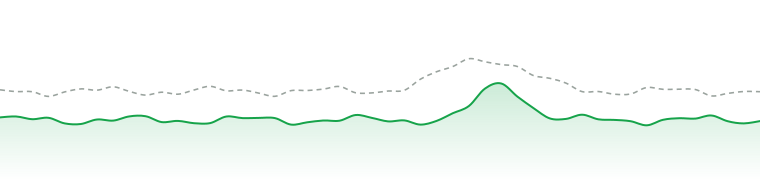
Get alerted when response times are slower than the same time yesterday. See where time is spent with a breakdown of each check.
Schedule real-browser page-speed tests to track Core Web Vitals.
Check logins, inner pages and APIs.
Cover the pages and requests your users depend on.
 Website and API checksCheck HTTP and HTTPS endpoints and validate GET or POST responses. See API monitoring.
 Multi-step login flowsCheck that a sequence of login steps works as expected.
 Inner page checksCheck pages beyond the homepage, found for you without extra set-up.
 SSL certificate expiryKnow when a certificate is approaching its expiry date. See SSL certificate monitoring.
Alerts you can trust.
A false alarm at 3 am costs as much trust as a missed outage. Every alert is checked before it is sent.
- Confirmed from other regionsWhen one probe sees a failure, probes in other regions check again before you get an alert.
- Probes check themselvesEach probe checks known-good websites. Results from a probe with network problems are ignored.
- Comparable timingsA monitor stays on the same probe in each region, so its response times can be compared from day to day.
- Only lasting slowdownsSlowdown alerts need a large change that lasts, not one slow response.
Alerts where your team already works.
Choose which people and channels receive the alerts for each monitor.
 EmailSend alerts to each team member, or to a shared address.
 Slack and Microsoft TeamsPost alerts and recoveries to the channel that your team watches.
 WebhooksSend alerts to your own systems, such as an incident tool or a chat bot.
- SMSSend text messages for the most important monitors, paid with prepaid credits.
Monitoring for your use case.
See how SmartUptime works for each kind of site and service.
- Website monitoringUptime, keyword and inner page checks, with slowdown alerts.
- API monitoringGET and POST checks with your own headers and body.
- SSL certificate monitoringWarnings before a certificate expires, in every plan.
- WordPress uptime monitoringFind database errors and broken pages, with no plugin to install.
- Free uptime monitoring50 monitors with 5-minute checks. Commercial use is allowed.
- Compare with other toolsSmartUptime compared with UptimeRobot, Better Stack and Pingdom.
Coming soon.
These features are planned for soon after launch.
- Heartbeat checksYour cron jobs and background tasks send a request after each run. You get an alert when a request does not arrive.
- Domain expiryGet a warning before a domain registration expires.
- TCP, ping and DNS checksCheck mail servers, databases, DNS records and other services that are not websites.
- Maintenance windowsPause alerts during planned work, and show the work on your status page.
- Failure evidenceKeep a screenshot and a copy of the response when a check fails.
- Asset checksCheck the CSS, JavaScript and images that a page uses, not only the HTML.
- Page speed testsLoad your pages in a real browser to track Core Web Vitals on a schedule, and again when a page changes.
Start with your first website.
Keep an eye on uptime and performance from one place.